A Series of Unfortunate Trials.
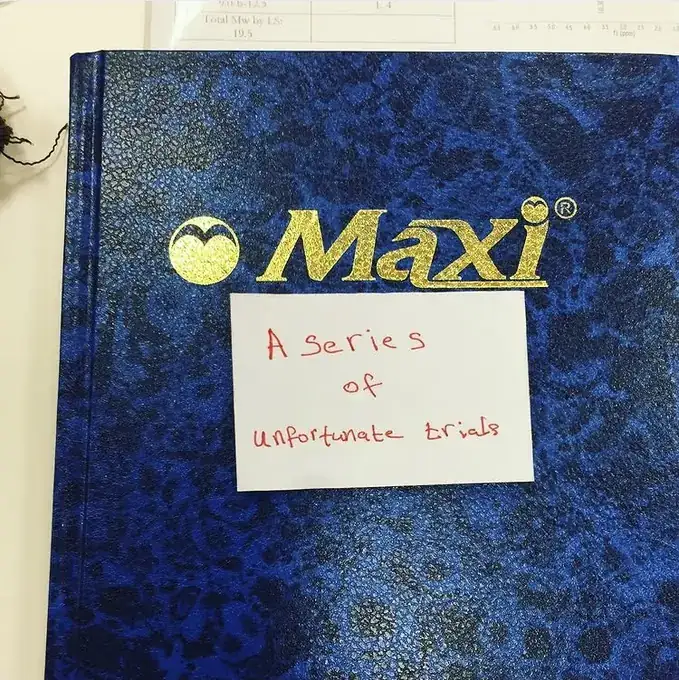
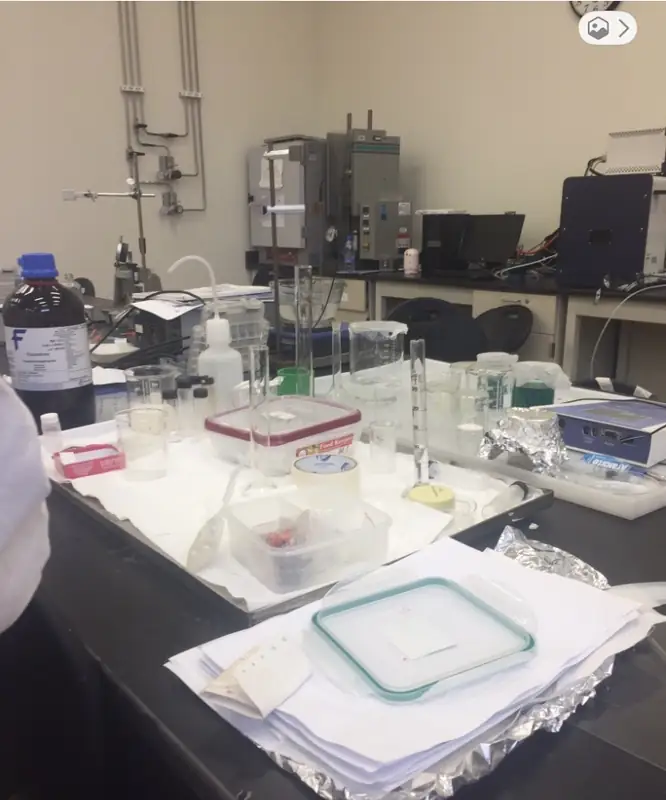
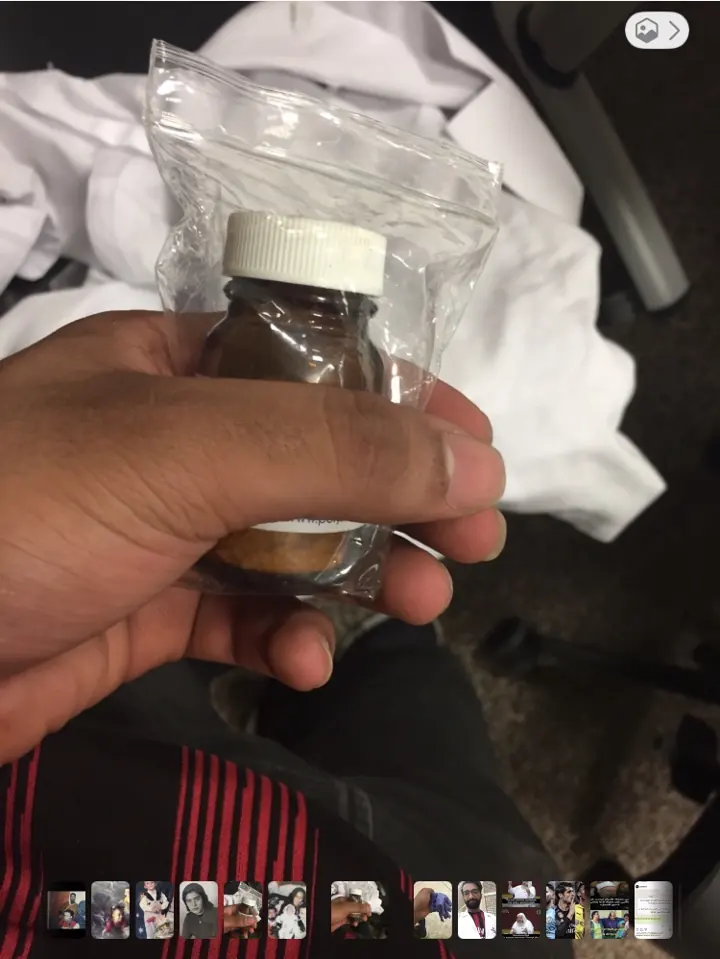
My friends and I were working on different copolymers. Each of us had a material of our own to investigate, so even when we were sharing a laboratory and comparing notes, we were not quite performing the same experiment. Mine developed an especially stubborn problem: the polymer appeared to have become crosslinked, and it would not dissolve the way I had expected. I repeated the attempts, changed what I could, and watched the same basic difficulty return. Eventually I gave the notebook a title: A Series of Unfortunate Trials.
The solubility problem led me to think about polymer architecture. A diblock copolymer joins two different polymer segments; in a selective solvent it may form micelles, depending on the chemistry of the blocks and their compatibility with the medium. A covalently crosslinked network behaves differently because its chains cannot separate freely. Such a material may swell without dissolving. I suspected that my sample had formed a network, but failed dissolution alone could not distinguish crosslinking from aggregation, crystallinity or poor solvent compatibility.
At the time I suspected unwanted crosslinking. A failed dissolution attempt, however, cannot establish a covalent network: solvent compatibility, aggregation, crystallinity or other material changes remain possible explanations. Distinguishing them would have required systematic solvent extraction and swelling measurements alongside appropriate chemical characterization. The notebook preserves the observation and my hypothesis, not a confirmed mechanism.
What I remember most clearly is the contrast between my work and that of my friends. We had been assigned different copolymer systems, and that made the conversations about our results particularly vivid. Chemistry was no longer the tidy movement from a reaction scheme to a product. Two materials belonging to the same broad family could behave differently for reasons hidden in their molecular architecture or preparation. The experiment that would not cooperate demanded more thinking, not less.
I wrote “A Series of Unfortunate Trials” on the notebook after several attempts to dissolve the material had failed. The title was a joke about repeated failures, but I still needed to record the attempts and work out what to test next. I did not identify a crosslinked structure from those attempts. What I had was an insoluble sample, an explanation I suspected, and more characterization to do.
Related sources
The assignment of different copolymers to friends, the difficulty dissolving my material and the interpretation of possible crosslinking are my firsthand recollections. The 8 October 2017 date is the archived post date, not a verified date for each attempt. Separately, the QNRF project UREP19-110-1-014 investigated polymeric micelles for removing polycyclic aromatic hydrocarbons from environmental samples, using commercially obtained block copolymers and Flory–Huggins compatibility calculations. Its final report does not document this synthesis setback, so I do not present the notebook as a result from that grant.
Explore the documented polymer research ↗