Scientific practice / primary evidence / 2015–2026
What I used. What it could establish.
An optical probe can change colour without being selective. A plasma-treated polymer needs surface measurements, and a flow chamber can quantify cell injury without reproducing an entire lung. These pages examine the methods behind those questions and link each one to the research in which I used it or contributed.
I began with curcumin sensing in 2015 and later worked on polymer surfaces, lung epithelial injury, zebrafish imaging and computational research. Each section shows which questions required the method and what I personally did within the project.
The original paper or research record accompanies each method. Where I use an explanatory drawing rather than an experimental image, the caption identifies it.
Personally conducted or developed
Explicitly documented experimental execution, protocol construction, theoretical calculations, computational work or analyses.
Part of a coauthored paper
Methods described in collaborative publications, with my own experimental or analytical tasks identified for each project.
Ongoing or scholarly methods
Current MSc research, or literature/patent synthesis rather than newly published experimental measurements.
01 / Molecular chemistry & polymer thermodynamics
From spectra to molecular selection.
Chemical evidence begins with controlled responses and stated limits. These projects connect optical sensing, organic synthesis, and the thermodynamics of amphiphilic copolymers.
2015 project · 2019 original paper
UV–visible and fluorescence sensing
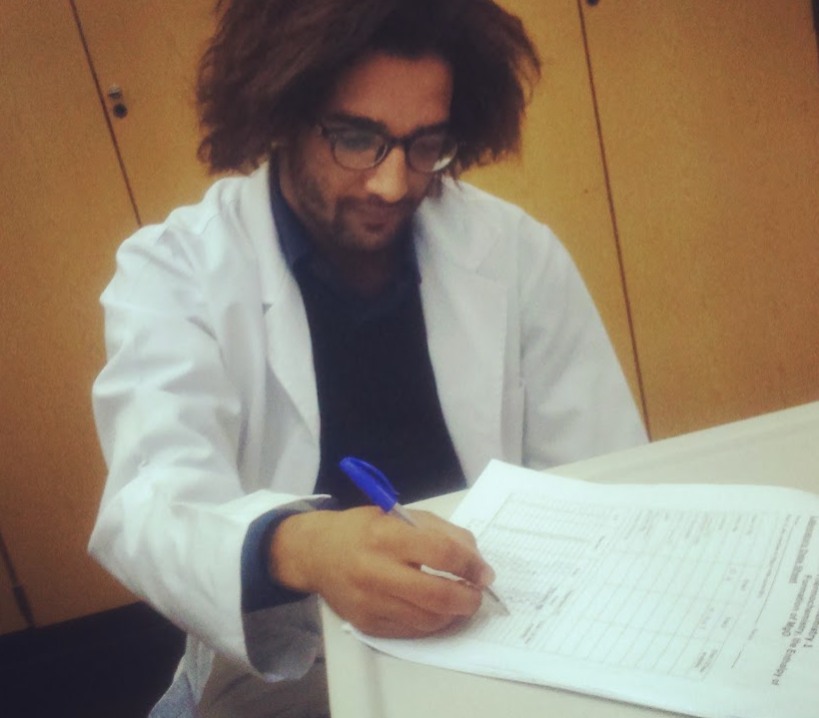
Personal university research archive, January 2015. Context photograph, not a figure from the curcumin paper.
The curcumin–cyanide work used a colorimetric response and UV–visible absorbance changes near 421 and 520 nm, fluorescence quenching, selectivity testing, and cellular imaging to examine chemical response in solution and living cells.
A detectable optical response is not alone proof of molecular specificity; hydroxide interference was reported and is part of the published selectivity context.
Research role. Experimental involvement in the curcumin investigation; not the paper’s data analysis, interpretation or manuscript drafting.
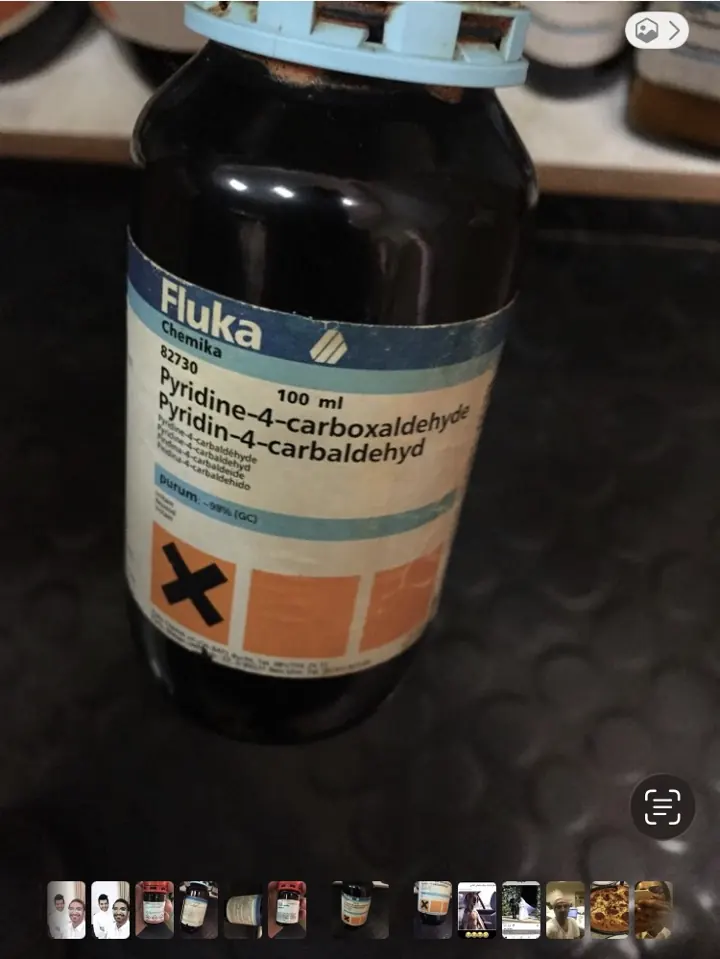
Archived reagent photograph from the imine/synthesis period (2018); contextual evidence, not a purity or structure determination.
The imidazopyridine project and later imine/Schiff-base sensing work required synthetic planning, compound characterization and a careful distinction between intended targets and products actually obtained.
The associated project dossier preserves unsuccessful routes rather than presenting the proposal as a completed synthesis.
Research role. Undergraduate experimental chemistry and research contributions documented in the UREP23 archive and BSc thesis.
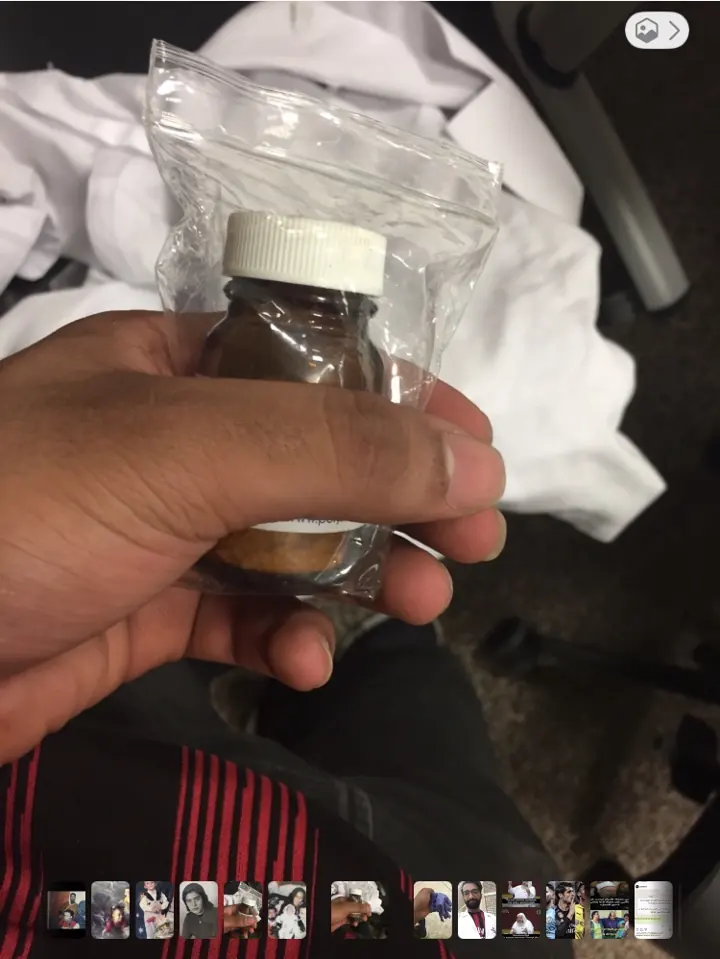
Explanatory illustration of a theoretical selection problem; no measured encapsulation efficiency is shown.Original Qatar University copolymer sample photograph (2017), shown as project context rather than a published quantitative result.
The PAH-remediation proposal considered compatibility between hydrophobic pollutants and micelle-forming polymer blocks. The Flory–Huggins interaction parameter χ offered a theoretical basis for comparing polymer–solute interactions.
A favorable theoretical estimate cannot establish measured micelle size, critical micelle concentration, actual pollutant loading, or successful remediation.
Research role. Drafted proposal material and personally performed Flory–Huggins χ-parameter calculations to support candidate diblock-copolymer selection.
The two Popelka-associated PLA studies examined whether surface activation and organic-acid modification change the behavior of films and fibrous scaffolds. Their measurements answer different questions about chemistry, topography and performance.
2020 & 2021 · published materials research
Electrospinning, RF plasma & grafting
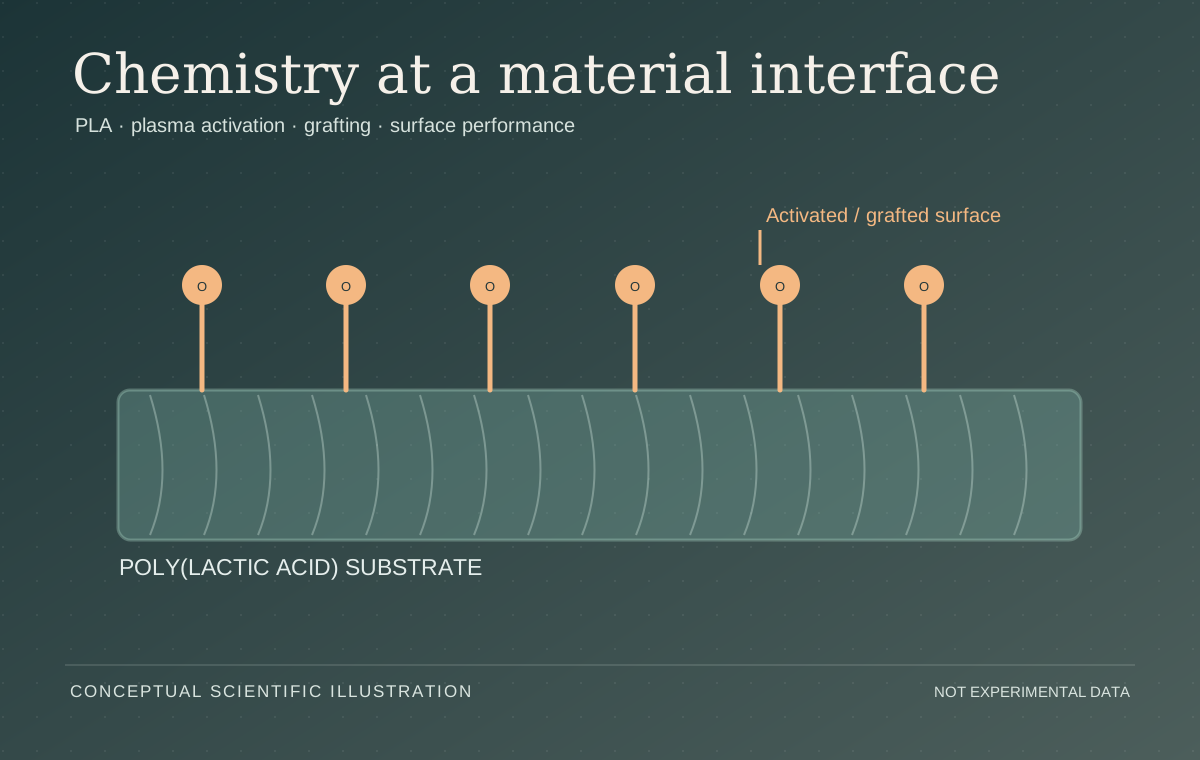
Conceptual polymer illustration from the website’s figure library; not a scientific micrograph.
The 2020 scaffold paper reports electrospun PLA fibrous mats followed by radio-frequency plasma activation and grafting of ascorbic or fumaric acid. The 2021 film study examines related plasma-assisted modification on PLA film.
Fabrication, wettability, and surface functionalization are experimentally distinct steps: changing surface energy does not automatically demonstrate antimicrobial efficacy or improved adhesion.
Research role. Experimental participation, interpretation and manuscript work with Anton Popelka and collaborators; the 2021 journal CRediT statement explicitly lists investigation and formal analysis.
The published PLA film article includes FTIR (Fig. 3), XPS (Fig. 4), SEM (Fig. 5), AFM (Figs. 6–7), and contact-angle measurements (Fig. 1). The scaffold paper likewise reports FTIR–ATR, SEM and AFM.
Research role. These are methods documented across coauthored publications. Individual instrument operation is not assigned to Mahmoud unless independently supported; formal investigation and analysis contributions are documented.
The electrospun-scaffold study reports antimicrobial tests with Staphylococcus aureus and Escherichia coli. The PLA-film study additionally measures peel resistance of modified PLA/aluminum laminate interfaces.
Tests of bacterial susceptibility, surface wetting, and mechanical adhesion represent different performance endpoints and should not be conflated.
Research role. Work formed part of a collaborative experimental research programme; claim-specific results and author declarations remain with the two original papers.
The airway-reopening studies used a physical perturbation, a cellular model and independent readouts of injury. The key methodological question was whether the experimental stress and its consequences could be measured consistently.
2020 published methods protocol · 2021 first-author original paper
Parallel-plate chamber & bubble propagation
Mechanistic schematic of the published cell-injury model; not an experimental micrograph.
Confluent L2 rat pulmonary epithelial cells were cultured on collagen-coated coverslips in a parallel-plate flow chamber. Controlled air–liquid interface propagation generated a brief mechanical stress analogous to an airway-reopening event.
The 2020 protocol provides chamber assembly and operational steps. The 2021 experiment investigated drug pretreatment before bubble-induced mechanical injury.
Research role. Performed experimental cell-injury research, contributed to the protocol and led analysis, interpretation, figure preparation and writing in the 2021 first-author study.
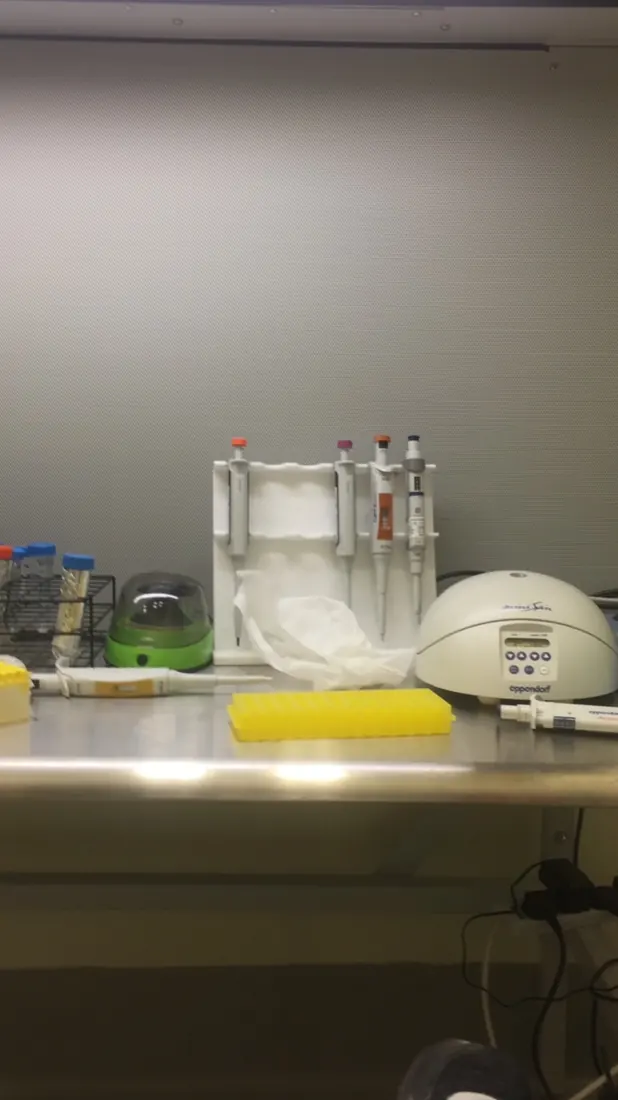
Personal archival photograph of a biological safety cabinet; a laboratory-context image, not a figure from the published viability assay.
The studies measured live versus injured cells using calcein-AM (green) and ethidium homodimer-1 (red), then assessed fluorescence images in ImageJ. Cytoskeletal evaluation used phalloidin labeling of F-actin and DAPI nuclear counterstaining.
The protocol and original physiology paper use fluorescence imaging to separate cell viability from actin organization; statistics supported comparisons between experimental conditions.
Research role. Experimental execution, image-based analysis and scientific writing are part of the first-author pulmonary study record.
The first-author lung study used AFM as a complementary readout of epithelial-cell morphology and surface topography after drug exposure. Its Figure 5 documents representative cell morphologies.
AFM observations supplement fluorescence readouts but cannot on their own establish a molecular causal pathway for protection against injury.
Research role. Interpreted experimental results in the first-author research; instrument-specific operation should not be inferred from coauthorship alone.
Zebrafish cardiovascular work crosses imaging modalities and timescales. The archive preserves the difference between experimental observations, hardware/protocol work and downstream mathematical analysis.
2018 original article · zebrafish development
Fluorescence imaging, Z-stacks & cilia distribution
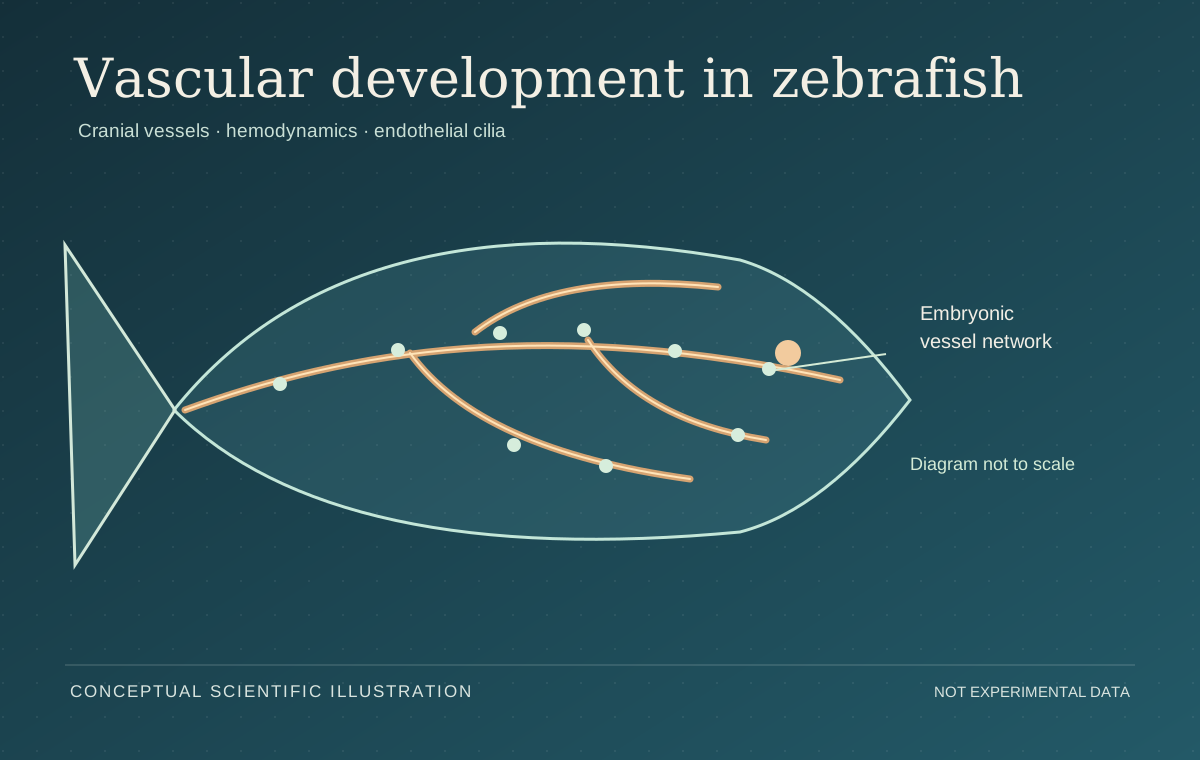
Interpretive zebrafish illustration from the site’s visual library, not an original microscopy field.
The cerebral-vascular cilia study used live and fixed zebrafish, transgenic fluorescence, microscopy Z-series and whole-mount approaches to examine cilia-related patterns during vascular development.
Publication of these techniques establishes their use in the study, not personal execution of every imaging or histological method by each coauthor.
Research role. Experimental zebrafish/imaging work only. Mahmoud did not perform the paper’s data analysis, interpretation or manuscript writing.
High-speed video microscopy, MicroZebraLab & ImageJ
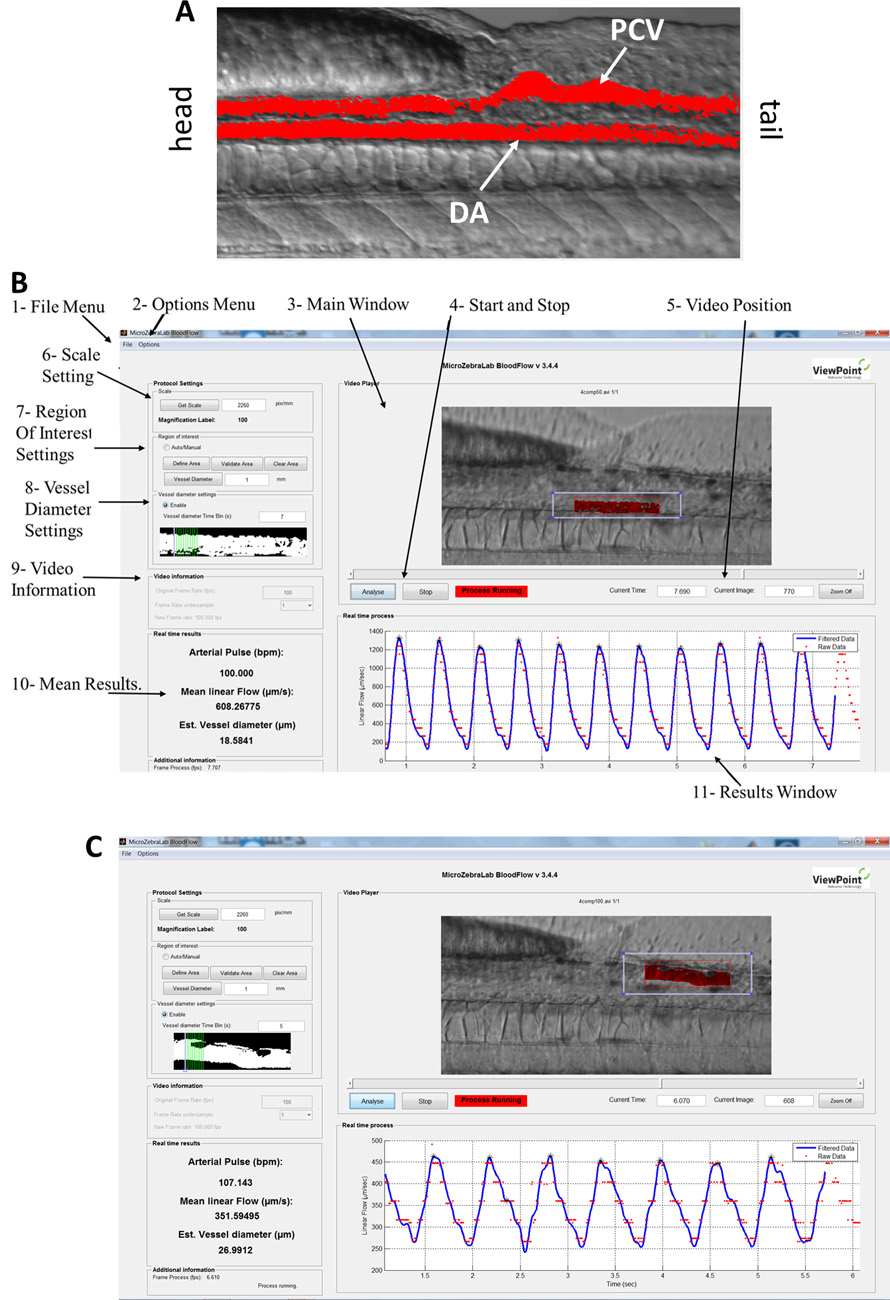
Figure from the coauthored Micron (2020) high-speed imaging work, reproduced from the existing research website archive. Open the source paper for the complete figure legend and methodological context.
Brief high-speed videos of embryonic zebrafish hearts and major vessels were recorded through a microscope equipped with a high-speed camera. The study describes image-based cardiac and hemodynamic analyses using MicroZebraLab and ImageJ.
Acquisition reliability, documented camera/microscope configuration and repeatable analysis instructions are essential for converting short videos into meaningful physiological measures.
Research role. Implemented the high-speed camera/microscopy setup, performed experimental acquisition and wrote the imaging and analysis protocol and manuscript material; downstream analyses are not all claimed as personal execution.
Personal archival microscope photograph from 2017; documentary context rather than a published experimental image.
Microscopy projects require sample preparation, instrument alignment, suitable acquisition parameters and defensible recordkeeping. The website’s imaging archive documents practical setup work, research figures and protocol development.
Photographs of tools or laboratories illustrate research settings but cannot substitute for the acquisition metadata and analysis trace associated with a published figure.
Research role. Laboratory involvement in biological imaging and experimental methods, with project-specific roles detailed in the primary records.
Observational biomarker studies, national cardiovascular registries and diagnostic algorithms require different forms of rigor than bench experiments. Assay validation, registry completeness, confounding, clinical endpoint definitions and model validation must remain visibly distinct.
Conceptual workflow derived from the 2022 study's Materials and Methods, not an original patient-data figure.
The coauthored clinical investigation analyzed samples and clinical information from 200 hypertensive COVID-19 patients. The paper reports plasma ACE2 and angiotensin II measurements with ELISA-based assays, alongside disease-severity and antihypertensive-class comparisons.
A circulating ACE2 concentration is not a direct assay of tissue ACE2 expression, ACE2 enzymatic activity or therapeutic drug-target engagement.
Research role. Supported grant acquisition and research development, contributed to analysis, interpretation and manuscript writing. The available contribution record does not establish personal execution of the ELISA assays.
The ACE2 study describes log transformations where appropriate, group comparisons and linear regression using clinical biomarkers and covariates. Such analyses test association; medication-class comparisons in a non-randomized cohort do not establish drug causality.
The conceptual connection between soluble ACE2 biology, pharmacotherapy and prognosis required explicit separation of biological interpretation from statistical association.
Research role. Grant development, data analysis, interpretation and portions of manuscript writing in the ACE2 research programme.
Conceptual overview of the published machine-learning workflow, not a reproduction of the model architecture figure.
The pilot study examined congenital-heart-disease classification from fetal ultrasound videos, combining convolutional feature extraction with sequence models and stacking. Reported video-level and subject-level evaluation addresses clinically important differences in the unit of prediction.
Clinical model claims depend on validation design, sample size, patient-level separation and external replication; high performance on an internal pilot dataset is not proof of generalizability.
Research role. Equal-first-author contribution to data preparation, machine-learning modeling, validation, analysis and manuscript drafting.
Qatar University Biomedical Research Center · Clinical registry project
TAVI registry: clinical data organization and outcomes research
Conceptual illustration of registry-project tasks derived from the documented research-assistant role. It is not a patient record or a figure from a publication.
This clinical research project concerned organization and analysis of transcatheter aortic valve implantation (TAVI) registry data, including defining study variables, coordinating longitudinal case records, reviewing database completeness and consistency, and preparing information for outcomes evaluation.
My project contribution. Worked on study-variable definition, longitudinal data collection and organization, database quality control, outcome analysis and research reporting. This was participation in the registry project, not authorship, data analysis for, or any other contribution to a resulting paper. I did not perform the TAVI procedures.
06 / Structure-based drug discovery and computational molecular design
From a possible binding pose to a testable pharmacological hypothesis.
Molecular docking, molecular dynamics, virtual screening, structure–activity modelling and ADMET prediction belong in the same methodological conversation as chemical synthesis and pharmacology. Their outputs are hypotheses to be experimentally tested. My 2026 SLIT2–ROBO patent review examined therapeutic modalities and enablement across this target family, including small-molecule and macrocyclic inhibitors of protein–protein interactions. That review is not presented as a personally executed docking or MD study. Completed personal runs, structures or calculations will be attributed only when supported by a specific research record.
Structure-based design / methodological framework
Molecular docking & protein–ligand interactions
Original explanatory schematic of ligand positioning and contacts; not a result from a docking run, not a SLIT2–ROBO structure.
A defensible docking workflow starts with receptor identity and protonation, ligand stereochemistry, cofactor and water handling, binding-site definition and a documented search/scoring protocol. Redocking a crystallographic ligand, pose clustering and comparison with orthogonal biochemical assays address different kinds of uncertainty.
Docking scores approximate aspects of pose favorability; they do not by themselves prove binding affinity, inhibition or cellular target engagement. For large protein–protein interfaces such as SLIT2–ROBO, small-molecule access to a productive pocket is a separate experimental challenge.
Portfolio attribution. Structure-guided discovery is a methodological area linked to the research agenda and SLIT2–ROBO literature assessment; a personal docking run has not yet been tied to a documented project or archived output.
Screening funnel: receptor and ligand preparation, docking, pose inspection, developability assessment, then biophysical or functional testing. Schematic, not experimental evidence.
Structure-based screening combines protein/ligand preparation, reproducible conformational sampling, ranking and human inspection of plausible contacts. Library curation, tautomer and stereoisomer enumeration, pan-assay interference filters, synthetic accessibility and chemical-diversity selection can materially affect which molecules reach experimental testing.
For the SLIT2–ROBO axis, assay architecture and receptor-directionality risk matter alongside computational ranking. A predicted hit should advance through binding measurements and functional tests rather than be described as an inhibitor on docking alone.
Portfolio attribution. Virtual screening and receptor-pocket analysis are documented here as methodological context relevant to the reviewed patent and medicinal-chemistry research; no completed personal screening campaign is claimed.
Molecular dynamics as an ensemble/sampling method, distinguished from a static docking pose. Conceptual illustration only.
Unlike a single docked pose, molecular dynamics explores time-evolving conformational ensembles under an explicit force field and a specified solvent/ion model. Common observables include RMSD/RMSF, solvent exposure, hydrogen-bond persistence, clustering and convergence assessments; enhanced sampling and binding free-energy methods require additional validation assumptions.
Stable-looking trajectories do not automatically prove experimental affinity. Protein flexibility, alternative conformers, protonation states and simulation length can change the inference.
Portfolio attribution. MD is included as a structure-guided discovery method relevant to prospective therapeutics research, not as a verified personally executed simulation.
Illustrative structure–property/structure–activity modelling workflow, not a fitted model from the research portfolio.
Ligand-based design uses descriptors, structural fingerprints, pharmacophoric features or molecular similarity to generate activity hypotheses where suitable training data exist. Mechanistic interpretation depends on endpoint quality, applicability domain, scaffold-aware splits, calibration and appropriately independent validation.
The necessary distinction: an imine sensor series, a PAH–copolymer compatibility model and a predictive QSAR model ask different questions. The Flory–Huggins calculations personally performed for UREP19 are documented physical-chemistry calculations, not retroactively relabelled QSAR or docking.
Portfolio attribution. QSAR and pharmacophore modeling are presented as relevant computational drug-design frameworks; your documented personal numerical work remains explicitly credited to polymer thermodynamics and separately verified projects.
Molecular properties / translational drug discovery
Drug-likeness, ADME/Tox & property prediction
Physicochemical descriptors such as molecular weight, polarity, partition coefficients, ionization and solubility are upstream variables. ADME predictions address absorption, distribution, metabolism and excretion under model assumptions, while toxicity requires additional endpoint-specific evidence. Screening thresholds are prioritization tools, not substitutes for pharmacokinetics.
For inhaled drug delivery, local epithelial exposure, dissolution, clearance and systemic distribution cannot be reduced to oral drug-likeness cutoffs. This is where molecular property prediction needs to meet your pharmaceutical formulation experience.
Portfolio attribution. Drug-property assessment is a methodological framework for your discovery-to-delivery agenda. No personally run SwissADME or ADMET analysis is asserted without a saved compound-level result.
Computational candidates need an experimental validation ladder: direct binding (where feasible), selectivity, receptor occupancy or functional modulation, pathway response, relevant cellular phenotype and exposure at the intended site of action. For protein–protein interaction inhibitors, orthogonal assays and interference controls are especially important.
Your SLIT2–ROBO patent review evaluated experimental enablement and signaling-directionality risk. This review-based evaluation is a substantiated research contribution and is distinct from personally conducting binding or cell-based experiments in the underlying patents.
Documented scholarly role. First-author patent-family retrieval, evaluation of mechanism and enablement, and translational analysis in the published SLIT2–ROBO review; no attribution of the reviewed experimental assays as your own.
Evidence status. The diagrams are explanatory, not generated docking poses or simulation data. The papers linked here establish that these are accepted computational methods; they do not establish that Mahmoud personally executed them. The existing evidence-confirmed research methods and published computational work remain documented in their own sections.
The doctoral-facing methods portfolio must distinguish your current inhalable-vesicle investigation from previously published work, and distinguish systematic scholarly analyses from measurements made at the bench.
MSc thesis · ongoing experimental research
Niosomes, proniosomes, DLS, FTIR & nebulization
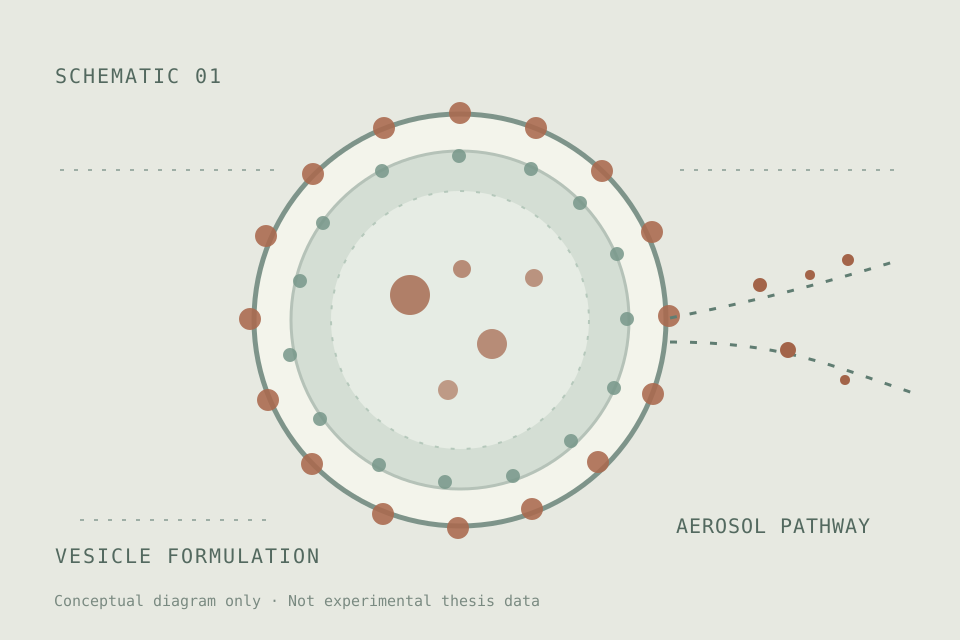
Conceptual vesicle image from the website figure library; an explanatory illustration, not electron microscopy or thesis data.
The ongoing dexamethasone-vesicle work links preparation and physicochemical characterization of niosomal/proniosomal carriers with questions about nebulization and aerosol deposition.
Hydrodynamic size and dispersity from dynamic light scattering, chemical compatibility from FTIR and aerosol behavior are complementary measurements. A particle-size result does not by itself establish a respirable dose or pharmacological exposure.
Research role. Ongoing MSc formulation and physicochemical characterization; aerosol deposition and therapeutic performance remain research questions.
Patent-landscape research & molecular mechanism synthesis
The SLIT2–ROBO patent review examines therapeutic modulation across molecular mechanisms and intellectual-property records. Patent claims, experimental validation and clinical efficacy represent different levels of evidence.
For the ACE2 mechanistic review and other scholarly chapters, literature-based synthesis is accurately described as scholarly research rather than new experiments.
Research role. Led literature research, evidence synthesis and drafting of first-author review work. Patent review does not imply personal execution of every experimental technique reported in the underlying patents.
The four QNRF undergraduate grants connect the chemistry, physiology and biomaterials methods above to their original proposals and project records. Clinical and published methods retain separate primary bibliographic links.
UREP19-110-1-014 · polymer micelles
PAH–diblock-copolymer compatibility
Research proposal contribution and personally calculated Flory–Huggins interaction parameters; consult the project record for the original scope.
Cell culture, flow-induced stress exposure and experimental injury readouts; follow the grant record alongside the published flow-chamber protocol and physiology study.
Every technique here is traceable to a publication or project; every claim about my personal contribution is deliberately narrower than the complete methods section of a coauthored paper. The point is not to appear competent with the greatest number of instruments. It is to show how evidence was actually obtained, how the analysis was performed, and where the limits of inference lie.